

Die interdisziplinäre Performance vereint Tanz, Klang und Word-Art. Dabei kommen unter anderem verschiedene Wissenschaftlerinnen und Wissenschaftler, die im marinen Kontext forschen, in Audioaufnahmen zu Wort. In enger Zusammenarbeit entwickelten Dr. Marie-Katherin Zühlke, Astrid Brünner und Susanne Gabler ein Kunstwerk, das aus dem Ausstellungsprojekt hervorgehende Annäherungen und Schnittmengen zwischen den Bereichen Kunst und Wissenschaft repräsentiert. Die Akteurinnen thematisieren darüber hinaus ihre Verbundenheit mit sowie die Sorge um unsere Meeresgewässer, dessen Gleichgewicht mittlerweile nachhaltig gestört ist.
anschließend öffentlicher Abendvortrag:
Transformation and adaptation of seagrass through time, from the age of dinosaurs to the modern Baltic Sea
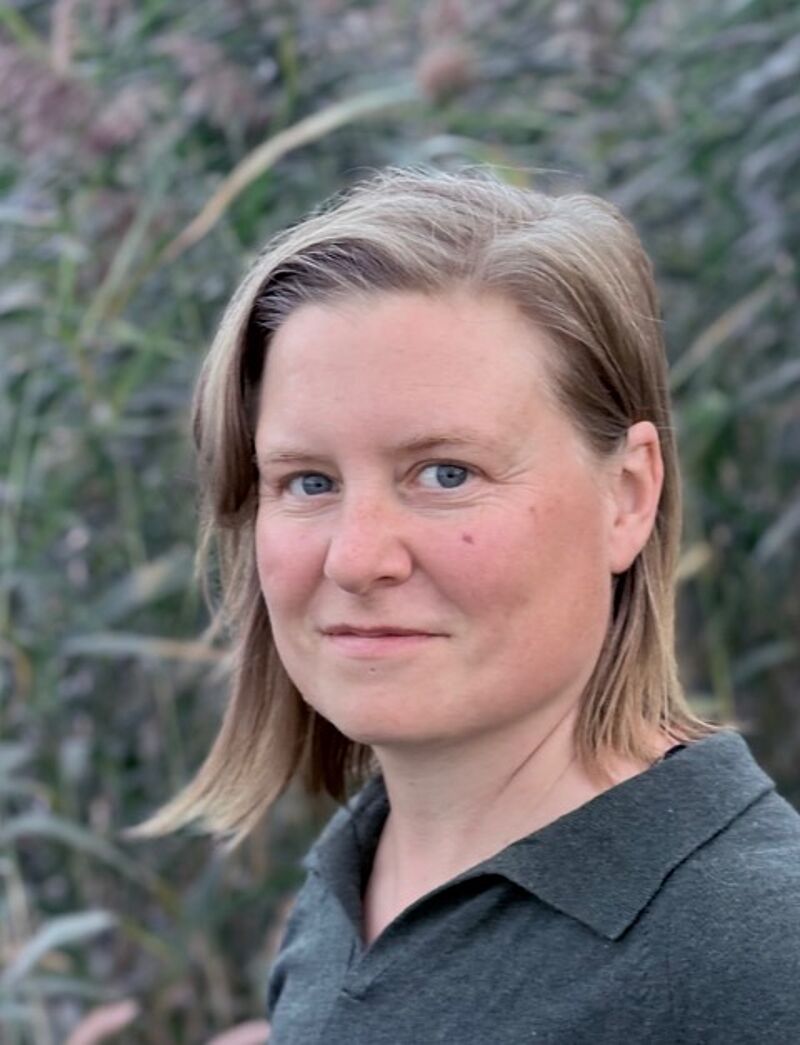
Dr. Mia Bengtsson
Universität Greifswald, Institut für Mikrobiologie
Seagrasses have an evolutionary history on land yet have adapted to a life in the ocean during a turbulent time on our planet. The extinction of the dinosaurs marked the beginning of a successful journey of seagrass into the oceans. However, the adaptation is still ongoing and modern challenges require seagrass to adapt in new ways. The Baltic Sea is a young and changing ecosystem that has been colonised by seagrass only during the last 8000 years. Eelgrass (Zostera marina) is a prominent habitat-forming seagrass in the Baltic Sea which has faced declines in the last half century due to anthropogenic pressures. Initial efforts to restore lost meadows have shown promising results, yet are time-consuming and small-scale. How can we help seagrass reestablish and adapt in the modern Baltic Sea? What can we as humans learn from the journey of seagrass about adapting to new environments in a sustainable way?
Moderation: Angela Hoppe