Skeletal muscle remodels with aging, exercise, disease, treatment, and altered mechanical loading. Understanding this adaptation requires a view across scales, from individual fibers to whole-muscle function. The extracellular matrix is central to this process, organizing force transmission between fibers, fascicles, muscles, and muscular compartments. This lecture connects findings from isolated fibers, intraoperative measurements, and non-invasive human studies. It discusses what the mechanisms of force transmission can teach us about artificial muscles and introduces research in Greifswald on proteins linking contractile structures to the extracellular matrix.
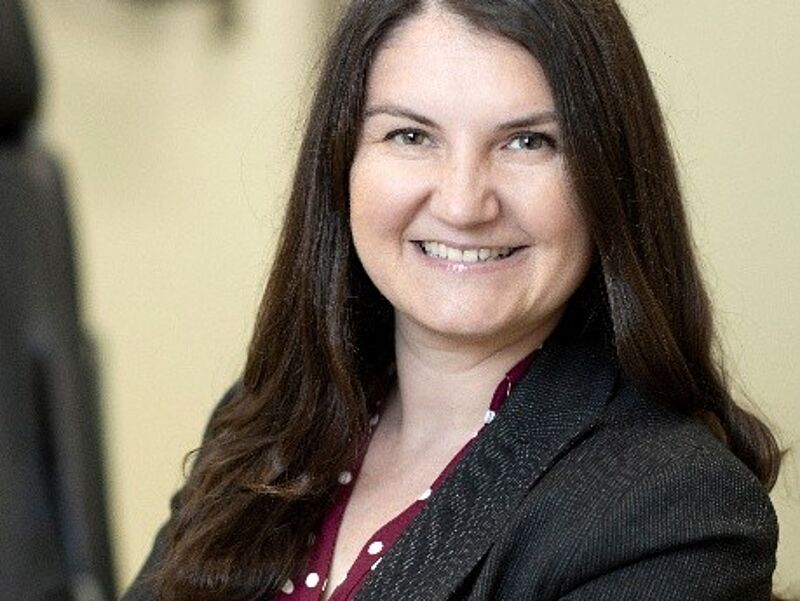
Filiz Ates is Head of the Experimental Biomechanics Group at the Institute of Structural Mechanics and Dynamics in Aerospace Engineering, University of Stuttgart. She holds a PhD in Biomedical Engineering. Her research spans soft-tissue mechanics, musculoskeletal, orthopedic, and sports biomechanics, and the biomechanics of human movement. Using experimental, imaging, and computational approaches, she investigates skeletal muscle function and adaptation in relation to exercise, aging, neuromuscular disease, and orthopedic treatment. In the winter semester 2026/27, Filiz Ates is a Senior Fellow at the Alfried Krupp Wissenschaftskolleg Greifswald.
Moderation: Professor Dr. Oliver Otto
How Skeletal Muscle Adapts Across Scales: Extracellular Matrix Mechanics and Lessons for Artificial Muscle Design
Veranstaltungssprache: Englisch, Fokus: GESUNDHEIT & LEBEN